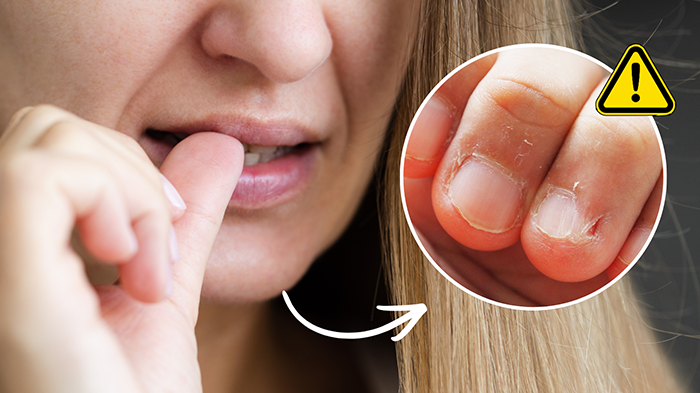
Do you find yourself gnawing at your nails during stressful meetings, boring classes, or late-night study sessions? You are not alone. Nail biting—medically known as onychophagia—is one of the most common “nervous habits” in the world, affecting between 20% to 30% of the population. While it may seem like a harmless way to pass the time or relieve tension, this seemingly trivial habit can lead to serious health consequences.
The Hidden Dangers: What Nail Biting Does to Your Body
The dangers of nail biting go far beyond just having ragged-looking fingertips.
Infections are the biggest concern. “Over time, bacteria can build up in the skin around the nail causing redness, irritation, and swelling,” warns Dr. Jasmine O. Obioha, a dermatologist at Cedars-Sinai. The repeated biting creates small breaks in the cuticle, which destroys the nail’s waterproof “seal,” making it thinner and more prone to infection. The warm, moist environment under your nails is a perfect breeding ground for bacteria—and every time you bite, you transfer those germs directly into broken skin. Nail biters are also significantly more prone to developing colds and flu since bacteria from your fingers regularly end up in your mouth.
Permanent nail deformity is another long-term risk. Chronic biting can inflame the nail matrix (the growth center under your cuticle), leading to horizontal ridges, pits, and permanent shortening of the nail. Over time, scarring can make these changes irreversible.
Dental damage often goes overlooked. Repetitive biting can chip or crack teeth, and may even change their position over time. It also increases the risk of gum disease and infection.
Why We Bite: Understanding the Psychological Drivers
Nail biting is now classified as a body-focused repetitive behavior (BFRB)—a chronic condition where people cause damage to themselves through repetitive habits.
For most people, nail biting is an automatic behavior. You don’t decide to bite—your hand moves to your mouth without conscious thought while you’re concentrating, bored, or anxious. Stress and anxiety are major triggers, as the repetitive motion can be a coping mechanism to manage challenging emotions. Boredom and inactivity are also common triggers. For those with ADHD, nail biting can be a form of stimming (self-stimulating behavior) used to help maintain focus or release excess energy. Genetics may also play a role—studies show that up to 63% of children who bite their nails have at least one other family member who does the same.
Breaking the Habit: Practical Strategies That Work
Breaking a lifelong nail-biting habit can be tough, but it is absolutely possible.
Start with physical barriers. Keep your nails trimmed short and smooth—if your teeth can’t grab onto a nail, biting becomes less satisfying. Apply a bitter-tasting nail polish formulated specifically to stop nail biting. The awful taste serves as an instant reminder every time you start to bite. Wearing gloves, adhesive bandages, or even artificial nails can also create a physical barrier while your nails heal and grow out.
Replace the habit with a competing response. When you catch yourself about to bite, clench your fist, squeeze a stress ball, or pick up a fidget toy. Keeping your hands busy with doodling, knitting, or using textured objects can satisfy the need for sensory input without damaging your nails.
Identify your triggers. For one week, keep a simple log every time you bite. Note what you were doing and how you were feeling. Once you know your specific triggers—stress, boredom, concentration—you can develop targeted strategies to address them.
For those who need extra help, habit reversal training (HRT) is the gold-standard behavioral therapy, which involves becoming more aware of your behavior, learning to recognize triggers, and practicing competing responses to replace biting. Some studies also suggest that the supplement N-acetyl cysteine (NAC) may help reduce the urge to bite for some individuals.
Healing Your Nails After Biting
Once you stop biting, your nails need extra TLC to recover.
Moisturize obsessively. Chronic biting leaves cuticles dry, cracked, and damaged. Apply a high-quality cuticle oil or rich hand cream several times a day, especially after washing your hands. For intensive overnight repair, apply cuticle oil and seal it with a layer of petroleum jelly before bed.
Avoid harsh chemicals. Give your nails a break from acetone-based polish removers and alcohol-heavy hand sanitizers, which will further dry and weaken recovering nails.
Keep them short and smooth. While growing out, maintain short, evenly filed nails with no rough edges—snags and tears can tempt you back to biting.
Be patient. It can take two months or more for severely damaged cuticles to fully return to normal. Consistency with moisturizing and gentle nail care will pay off.
The Bottom Line
Nail biting is more than just an annoying habit—it’s a health risk that can lead to painful infections, permanent nail damage, and dental problems. The good news is that with awareness, physical barriers, and healthier replacement behaviors, you can break the cycle and grow healthy, beautiful nails. Your nails will thank you—and so will your immune system.
Read also: Almond Nail Designs: A Perfect Blend of Elegance and Practicality